Imagine this. You receive a brief in the morning. By afternoon, the client wants to see three creative directions. By evening, they’ve shortlisted one, requested a few changes and perhaps asked you to explore something completely different.
The next morning, there’s a follow-up.
“Can we have a few more options?”
And somewhere in the conversation, almost casually, comes the question:
“Can’t we just use AI for this?”
Welcome to the new creative workflow.
A world where everything is expected yesterday, ideas are expected on demand and the time between having a thought and presenting a finished visual seems to have disappeared.
It’s fascinating how quickly we’ve adapted to this.
A few years ago, creative development involved a certain amount of anticipation. You shared a brief, went away, explored ideas, came back with a direction, discussed it, refined it and eventually arrived at something worth presenting.
Today, that entire process is increasingly expected to happen at the speed of a conversation.
And I can’t help but wonder:
We’ve made creativity instant. Have we actually made it better?
01/ 09
The new definition of fast
There’s no denying that AI has changed the creative industry.
What once required hours of image research, technical experimentation, visualisation and production can now happen in minutes. A simple prompt can generate an entire visual world. A few clicks can produce dozens of variations. Tools that once required specialised skills are becoming accessible to almost everyone.
It’s genuinely exciting.
And honestly, why wouldn’t we embrace it?
Technology has always influenced how we create. The printing press changed publishing. Photography changed visual communication. Digital tools changed the way designers work. Every new technology has challenged existing creative practices.
AI is simply another significant shift, perhaps one of the biggest we’ve experienced.
But there’s something different about this particular shift.
It’s not just changing how we work. It’s changing what people expect from us.
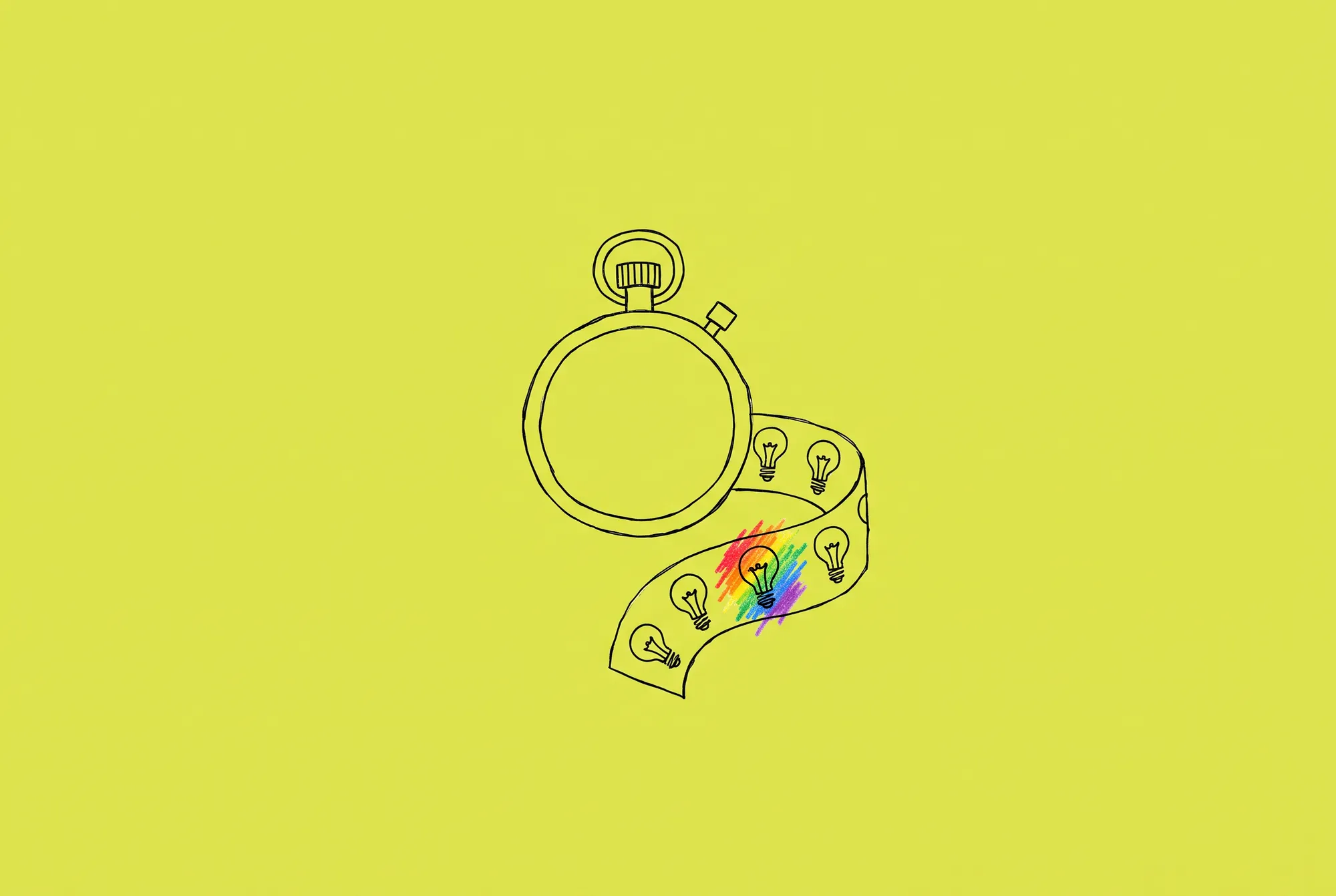
The speed of the tool has quietly become the benchmark for the person using it.
If a machine can generate an image in thirty seconds, why does a designer need three hours? If AI can produce ten concepts in a minute, why can’t a creative studio present ten directions by tomorrow?
Somewhere, we’ve started treating the time saved by technology as time that should automatically be taken away from the creative professional.
And that’s where things get a little complicated.
02/ 09
Somewhere, we became the machine
I think most people working in the creative industry have experienced some version of this.
The endless requests for alternatives. The expectation of immediate responses. The revisions that arrive one after another because, apparently, everything is just a small change.
“Let’s try another font.”
“Can we make it more premium?”
“Maybe something more minimal.”
“Can we see five more options?”
“Let’s explore a completely different direction.”
Individually, these are perfectly reasonable creative requests. Exploration is part of the job. Clients should question, challenge and contribute to the process.
But when every request comes with an expectation of immediate execution, something changes.
The creative professional slowly becomes an extension of the software.
A brief goes in. Concepts come out.
Feedback goes in. Revisions come out.
Another thought goes in. Another version comes out.
Repeat.
There’s little room for disagreement, reflection or even a simple pause to think.
And perhaps the strangest part is that the more capable our tools become, the more our human capabilities seem to be taken for granted.
We’re expected to think originally, execute flawlessly, respond immediately, revise endlessly and somehow remain creatively fresh throughout.
We’re being asked to work like machines while still being expected to think like humans.
03/ 09
The invisible part of making something
Here’s something about creative work that I think gets overlooked far too often.
People see the output. They rarely see the process.
A logo appears on a screen and it looks like a logo. A packaging design arrives in a presentation and it looks like packaging. A campaign is published and people see the final artwork.
But what they don’t necessarily see is everything that happened before that moment.
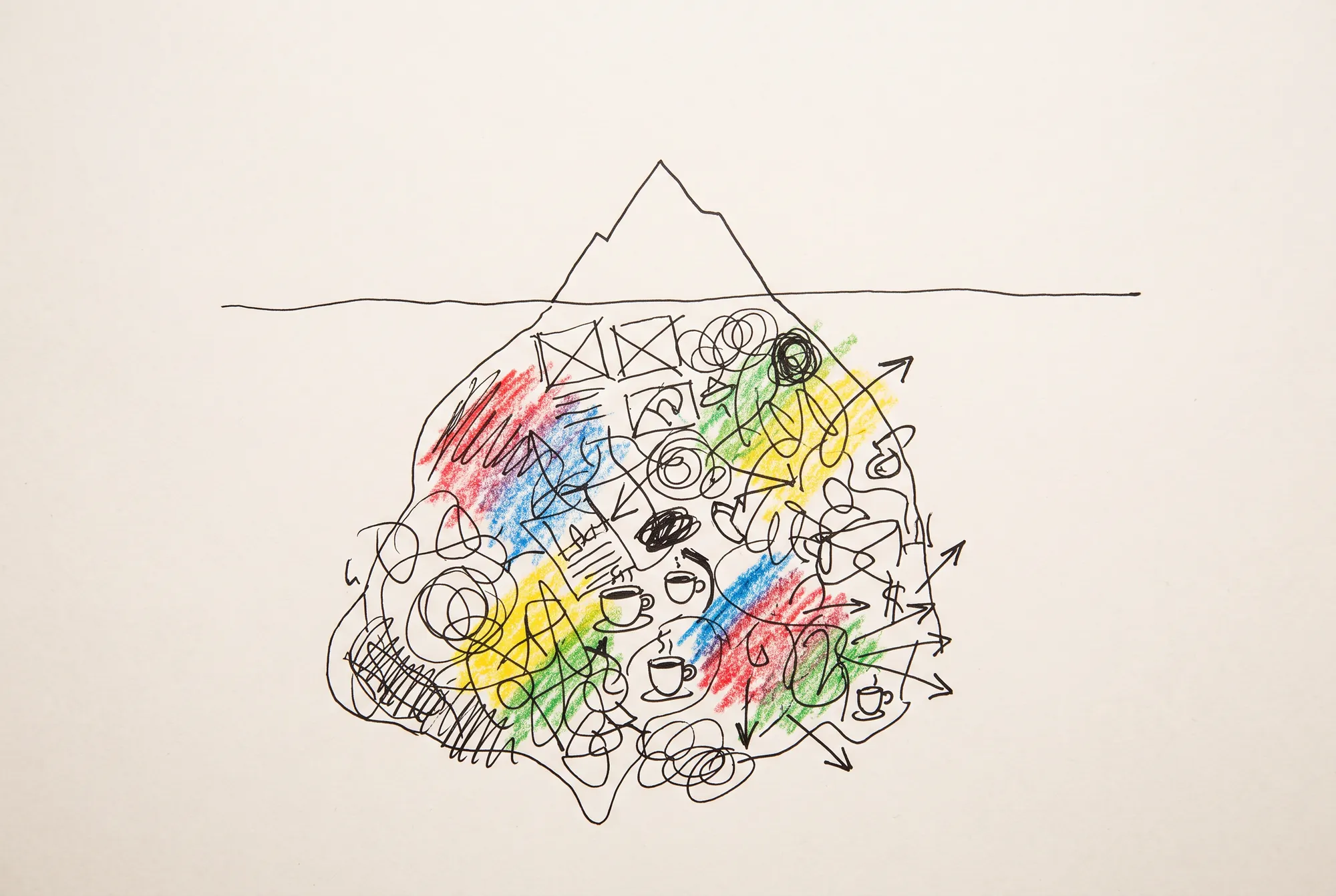
The conversations. The research. The references. The observations. The questions that needed answering before a single visual decision was made.
They don’t see the ten ideas that were explored and rejected, the three directions that almost worked, or the hours spent trying to understand what a brand actually needs to communicate.
They don’t see the designer sitting with an idea, moving things around, stepping away, coming back and realising that something still doesn’t feel right.
Sometimes, the most important part of the process is deciding what not to do.
And that’s difficult to explain when people are measuring creative work by the number of screens in a presentation or the time taken to deliver them.
A good idea doesn’t always arrive when you open your laptop.
Sometimes it comes while you’re reading something unrelated, observing a conversation, walking down a street or noticing something that most people would overlook.
Creativity doesn’t always follow a timetable.
The work may be visible on a screen, but the thinking happens everywhere.
04/ 09
More options. Less conviction?
One of the most interesting consequences of having unlimited creative possibilities is that choosing has become almost as difficult as creating.
Think about it.
When there are only a few directions to explore, you spend time understanding each one. You develop an idea, question it, refine it and make a decision.
But when you can generate fifty possibilities in a few minutes, there’s always another one waiting.
Perhaps the next option will be better.
Perhaps the next variation will look more interesting.
Perhaps there’s something else we haven’t explored.
And so the process continues.
We have become incredibly comfortable with generating alternatives, but increasingly uncomfortable with committing to a direction.
The result?
More options, more presentations, more revisions and sometimes, less clarity.
A creative project can spend days moving between possibilities without actually moving towards a solution.
This is where creative judgement becomes important.
The ability to recognise a good idea is not the same as the ability to produce one.
Knowing which direction is appropriate, which visual communicates the right message, which typography belongs to a brand and which idea should be discarded requires experience and perspective.
AI can help you explore the possibilities.
But having possibilities and having a point of view are two very different things.
05/ 09
The myth that faster means cheaper
There’s another conversation happening quietly alongside this one.
If a task can now be completed faster, should it cost less?
It’s an understandable question, particularly when technology is changing the economics of production.
But it also exposes how we sometimes misunderstand creative value.
Imagine hiring an experienced designer who understands branding, typography, visual communication and consumer behaviour.
They might look at a problem for twenty minutes and immediately recognise a direction that someone else could spend three days trying to find.
Does that make their work less valuable because it took less time?
Of course not.
You’re not simply paying for the hours someone spends moving objects around a screen. You’re paying for the years of experience that allow them to make those decisions in the first place.
The same principle applies to almost every profession.
We don’t necessarily value a surgeon by how long an operation takes. We don’t value an architect simply by the number of hours spent drawing a building.
Yet creative professionals are increasingly being judged by how quickly they can produce something.
Perhaps we need to revisit what we’re actually paying for.
The execution is only one part of the equation.
The thinking, experience, judgement and ability to solve the right problem are equally important.
06/ 09
I’m not arguing against AI
I want to make something clear.
This isn’t an argument about protecting creativity from technology. And it certainly isn’t an argument for returning to slower, more complicated ways of working.
That would be missing the point entirely.
AI is an incredible addition to the creative process.
It can help us explore unfamiliar territories, visualise abstract ideas, experiment with different approaches and eliminate repetitive tasks.
It can make small creative teams more capable and give independent professionals access to possibilities that were once available only to larger studios.
That’s a good thing.
But I believe we should be using these tools to create more room for thinking, not less.
If AI saves a designer three hours of production work, perhaps those three hours should be spent exploring a better idea, understanding the audience more deeply or solving a problem that would otherwise have gone unnoticed.
The real opportunity isn’t to produce the same amount of work in half the time.
It’s to use the time we’ve saved to make the work more meaningful.
There’s a difference between using technology to improve the creative process and using technology to justify expecting more work from the same person in less time.
One creates opportunity.
The other simply creates pressure.
07/ 09
Perhaps we’ve forgotten how to wait for a good idea
We’ve become accustomed to instant everything.
Instant communication. Instant deliveries. Instant entertainment. Instant answers.
And now, instant creativity.
We’re so used to getting something immediately that waiting for something worthwhile can feel like an inconvenience.
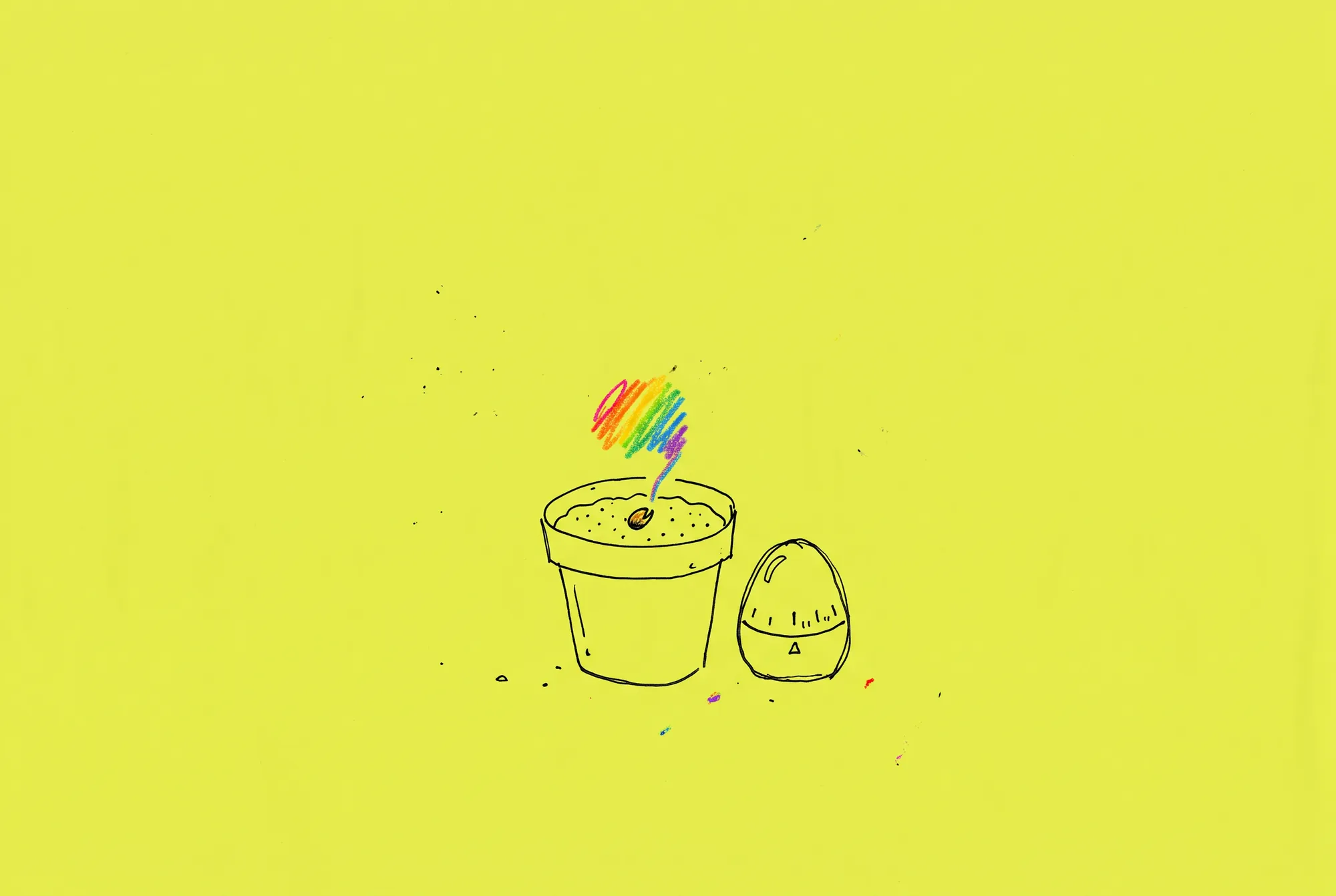
But creativity has always needed a little uncertainty.
Sometimes you need to explore an idea that doesn’t work. Sometimes you need to look at a problem from an entirely different perspective. Sometimes you need to stop working on something before you can understand what’s wrong with it.
These aren’t inefficiencies.
They’re part of the process.
Not every hour spent on a creative project needs to result in a visible deliverable. Not every experiment needs to become a presentation slide. Not every thought needs to be converted into an output.
Some of the best creative decisions happen in the moments when nothing appears to be happening.
And if we remove all those moments in the pursuit of speed, what exactly are we improving?
Maybe we’re becoming better at producing things.
But are we becoming better at creating them?
08/ 09
So, what should the future look like?
I don’t think the answer is complicated.
Clients should expect better work, not simply faster work.
Creative professionals should embrace new tools without feeling pressured to justify every minute they spend thinking.
Studios should build smarter processes, establish realistic timelines and communicate the value of their work beyond the final deliverable.
And perhaps all of us need to become a little more comfortable with the idea that not everything worth creating can be created instantly.
The relationship between a client and a creative professional should be a collaboration between two people trying to solve a problem.
Not a transaction where one person keeps pressing the refresh button, waiting for another version to appear.
Technology will continue to evolve. The tools will get faster, the possibilities will expand and the boundaries of what we can create will keep moving.
There’s no reason to resist that.
But as the tools become more capable, the value of human judgement, curiosity, perspective and imagination should become even more apparent.
Because the future of creativity shouldn’t be about how quickly we can make something.
It should be about how thoughtfully we can make something that matters.
09/ 09
One last thought
Maybe the biggest irony of the AI revolution is that we’ve spent years trying to build machines that can think, imagine and create like humans.
And just as those machines are getting better at it, we’re beginning to expect humans to behave more like machines.
We want the ideas, but not the waiting.
We want the originality, but not the experimentation.
We want the thinking, but not the time it takes to think.
We want everything creative, but we want it now.
And perhaps that’s the question worth leaving here.
If we’ve made creativity instant, but no longer give it the time to be thoughtful, have we really made it better?
Or have we just made it easier to produce more things, faster?
Because a world that can generate almost anything in seconds might eventually need something far more valuable than another tool. It might need people who still know how to think.