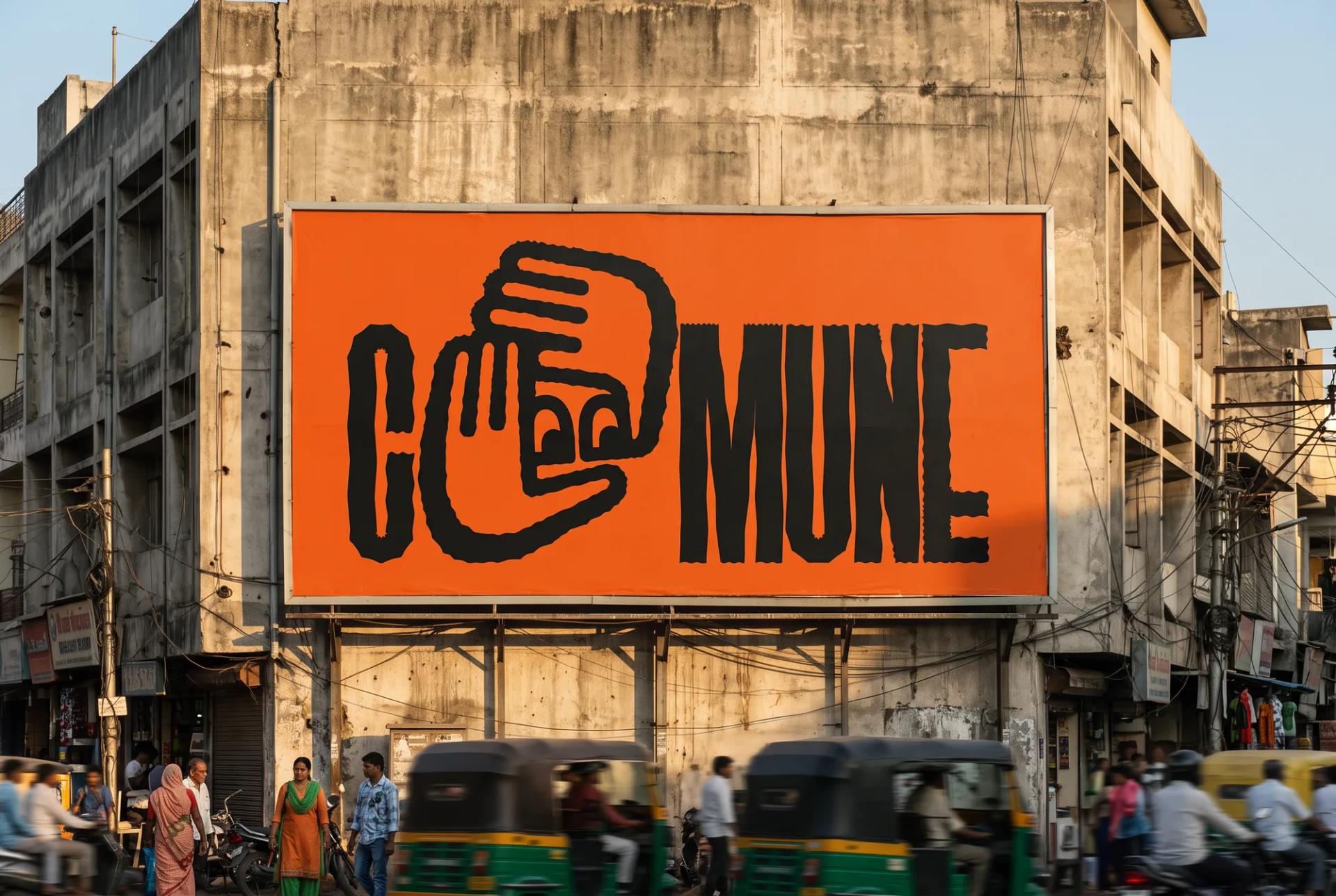
Imagine you are at a relative’s wedding in India and someone says this out loud.
“I have a stable job. I like my colleagues. On weekends I cook something simple and watch a film. I am happy with how things are.”
What happens next?
If you know this country you can already hear it. A polite pause. Then an aunty leaning in. “That is nice beta. But what are you planning next?”
Somewhere along the way ordinary became an accusation.
01/ 07
The extraordinary tax
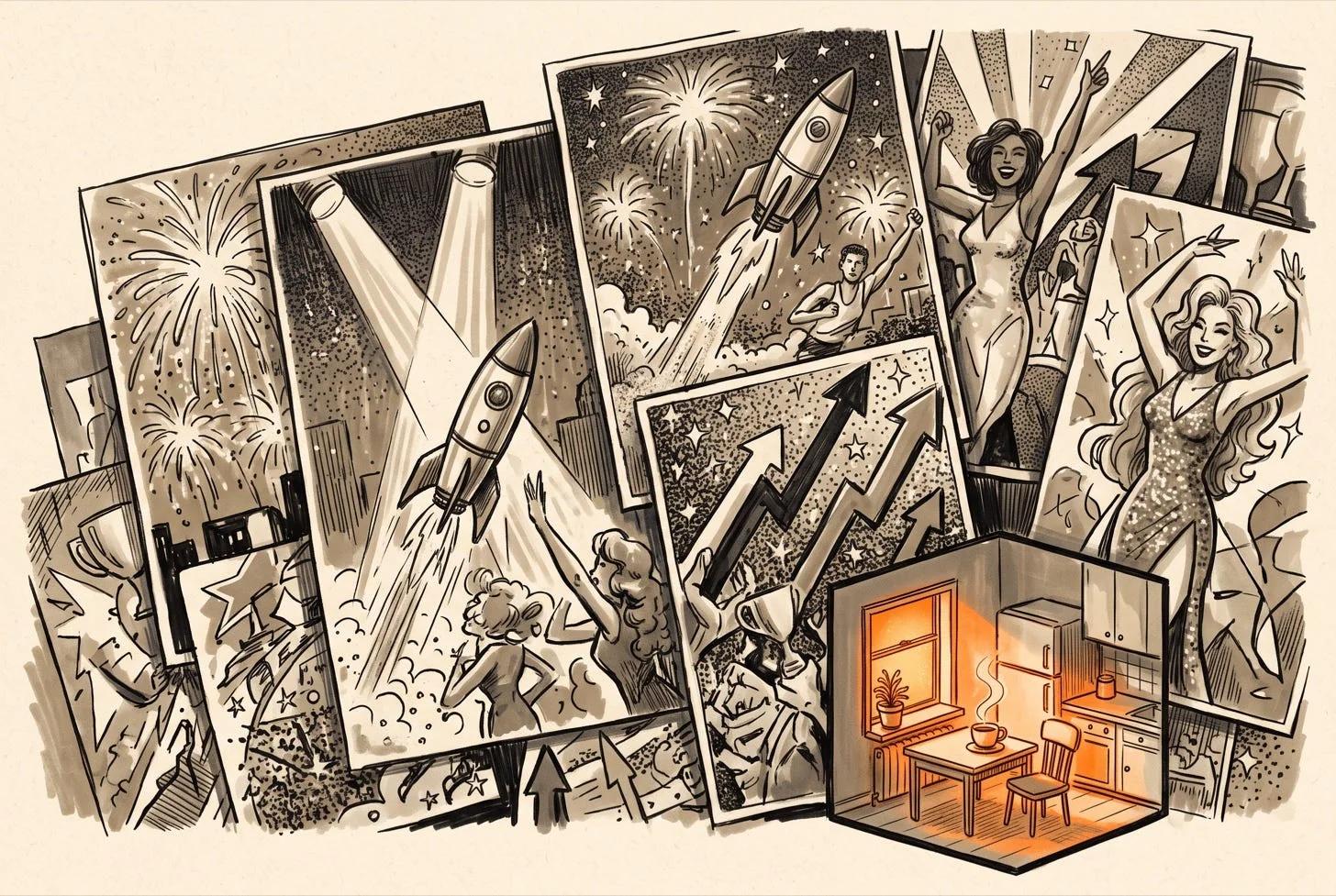
We now live in a culture where a good life has to be visible. It needs a story arc. A bold pivot. A before and after. A transformation montage with an emotional soundtrack.
Everywhere you look people are doing the most. The morning routines start at five. Everyone seems to run a side business alongside a day job. Somebody always knows somebody who cracked an exam. The side hustles have side hustles. The holidays happen in places with unpronounceable names and the photographs are suspiciously well lit.
Against that backdrop a quiet life starts to feel like a rough draft. As if someone forgot to finish it.
I would like to defend the draft.
02/ 07
How we got here
None of this appeared from nowhere. Let’s trace a few threads.
Comparison used to have a boundary. Decades ago you compared yourself to your neighbours and colleagues and cousins. A manageable group. The psychologist Leon Festinger described this tendency in 1954 in his social comparison theory. We judge how we are doing by looking at other people. That part is ancient and normal.
What changed is the size of the group. Now your comparison set is every impressive person on the internet. Your neighbour is a young founder in another continent. Your colleague is a stranger who retired at thirty five. Nobody can win that comparison because the group includes the very best of eight billion people.
We have our own version. Every Indian family has a Sharma ji ka beta. The cousin with the better marks. The neighbour’s son with the better package. Comparison was always part of the dinner table. The feed simply gave it a bigger table. And we have a word for the finish line. Settled. A good job and a flat and a marriage and you are settled. As if a person were a liquid.
The feed shows the peaks. People post their wins and their sunsets and their promotions. They do not post their Tuesdays. So you compare your entire messy reality to someone else’s highlight reel and wonder why it looks so dull.
Ambition became a personality. Wanting more used to be one trait among many. Now it is an identity. If you are not scaling something or optimising something or chasing the next level you can feel faintly irresponsible.
Everyone sells a transformation. Courses and coaches and books all need you to feel that your current life is lacking. That is the product. A satisfied person is not much of a customer.
03/ 07
What we lose
When ordinary becomes a failure several quiet things happen.
We stop enjoying what we have. A pleasant job becomes “not my passion.” A comfortable home becomes “not enough.” Contentment becomes a polite word for giving up.
We chase goals that are not ours. Many people spend years working toward milestones they picked up from a feed. Then they get there and feel strangely flat.
We lose respect for people who hold the world together. The chaiwala and the auto driver and the sabziwala and the kirana uncle who remembers everyone’s order. Nobody makes a motivational reel about them. Yet entire neighbourhoods depend on their steadiness.
And we overlook how much of life is simply ordinary and how much beauty lives there. A good meal. A familiar road. A conversation that goes nowhere in particular. Those are not the boring parts between the highlights. They are most of the film.
04/ 07
A word on ambition
I want to be careful here. I am not arguing against ambition. Wanting to build something or learn something or push yourself is one of the best things about being human. Plenty of people feel a genuine pull toward big goals and they should follow it.
My question is where the pull comes from.
There is a difference between ambition that rises from inside you and ambition that was installed by an algorithm. The first feels like curiosity. The second feels like anxiety wearing a motivational jacket.
One quick test. Imagine nobody would ever know whether you achieved this goal. Not a single like. Would you still want it?
If yes then it is probably yours. If not then you might be running someone else’s race.
05/ 07
Ordinary is not the same as unambitious
This is the thing I would most like to clear up.
A quiet life can contain great depth. It can hold deep friendships and real craft and slow mastery of something small. It can hold a garden and a family and a long marriage and a sense of knowing exactly where you stand.
An extraordinary life on the other hand can be shallow. It can be a series of impressive photographs with nobody home.
Visibility and meaning are different currencies. We keep confusing them because visibility is easier to count.
06/ 07
Small ways to push back
Mute the comparison machines. Unfollow accounts that reliably make you feel behind. Not because they are bad people. Because your attention is precious and you get to choose who gets it.
Write your own definition. Not the one you absorbed. Sit down and answer one question. What would a good ordinary week look like for me? Notice how much of it is already here.
Celebrate the unphotogenic. Mark the small wins nobody would post. A hard conversation handled well. A bill paid. A walk taken.
Give ordinary people their flowers. Thank the person whose work keeps your life running smoothly. Loudly.
Let some days be plain. Not every day needs a purpose or a highlight. Plain is a feature.
07/ 07
The quiet rebellion
Maybe the most radical thing you can do in a loud culture is to be content with a good ordinary life. Not forever. Not as a rule. Simply as a legitimate choice that does not need defending.
The world has plenty of people trying to be extraordinary. It could use a few more people who are paying attention to the life they already have.
When did you last have an entirely ordinary day and enjoy it? Tell me about it in the replies.