I’ve been thinking about this since yesterday.
Adobe MAX 2026 kicked off in Miami Beach and the announcements were quite something. Adobe is expanding its Creative Agent across Firefly and Creative Cloud and it’s opening the door to outside AI agents too. Through local MCP integrations, the agent you already use will be able to work directly inside native project files in Photoshop, Illustrator, Premiere and After Effects. Firefly, meanwhile, is turning into one place where models from Google, OpenAI, ByteDance and others sit next to Adobe’s own.
And Adobe isn’t alone. Figma is taking AI deeper into design and prototyping. Canva is making visual communication accessible to almost anyone. Runway is changing how we think about video and filmmaking. Midjourney keeps pushing image generation, while OpenAI and Google are building creative models of their own.
Almost every major technology company is moving towards the same future, one where the distance between having an idea and producing something gets smaller every day.
And honestly, I love seeing it happen.
I have no problem with AI. I use it, I experiment with it and I appreciate what it brings to the creative process. It removes limitations and lets us explore things that would once have taken a lot of time, money and technical expertise.
But one thing has been bothering me.
Are we becoming so comfortable letting AI create things that we’re slowly forgetting how to create them ourselves?
I don’t just mean executing a design or operating Photoshop. I mean the actual ability to think, imagine, experiment and arrive at an original creative direction. That’s where my concern begins.
01/ 07
We belong to a generation that learned the craft
There was a time when learning design meant spending hours understanding the tools. You learned Photoshop through layers, masks, selections and blending modes. You learned Illustrator by struggling with the Pen Tool, anchor points and curves that never sat right the first time.
You spent hours with typefaces. You studied grids, composition, colour theory and visual hierarchy. You made terrible designs. You spent entire evenings trying to recreate something you had seen somewhere, watched tutorials, collected references and tried one style after another.
Creating a single illustration or getting one composition right could take hours. But somewhere along the way, something more important happened. You developed an eye.
You started to sense when something felt wrong, even if you couldn’t explain why. You understood how a small change in spacing could shift an entire composition. You learned that good design isn’t about making things look attractive. It’s about making decisions.
Looking back, I don’t think those years were just about learning software. They were about training ourselves to think visually. And I wonder whether we give that process the same importance anymore.
02/ 07
We are generating more, but are we creating more?
Take a look at Instagram, Pinterest or almost any visual platform. AI-generated content is everywhere: posters, illustrations, ads, product campaigns, social media creatives, even café menus and outdoor billboards.
Businesses that once came to designers for simple creative needs are now trying image-generation tools themselves. And why wouldn’t they? The tools are accessible, fast and capable of impressive results.
But I’m starting to notice a certain sameness. Different brands, different businesses, different people and yet the same compositions, the same lighting, the same illustration style. We have more ways to generate images than ever and still so much of what we see feels like something we’ve already seen.
It may be too early to draw conclusions. But I do wonder whether we’re confusing the volume of creative output with the growth of creativity itself. Making something visually impressive and coming up with an original idea are two very different things and we need to be careful not to lose that distinction.
03/ 07
The biggest thing we might be outsourcing is our imagination
Technology has always helped us execute ideas better. Better cameras, better software, more powerful computers. AI takes it a step further, because we’re no longer only asking it to help execute an idea. We’re asking it to come up with the idea itself. A concept, a direction, a visual style, the copy, the campaign.
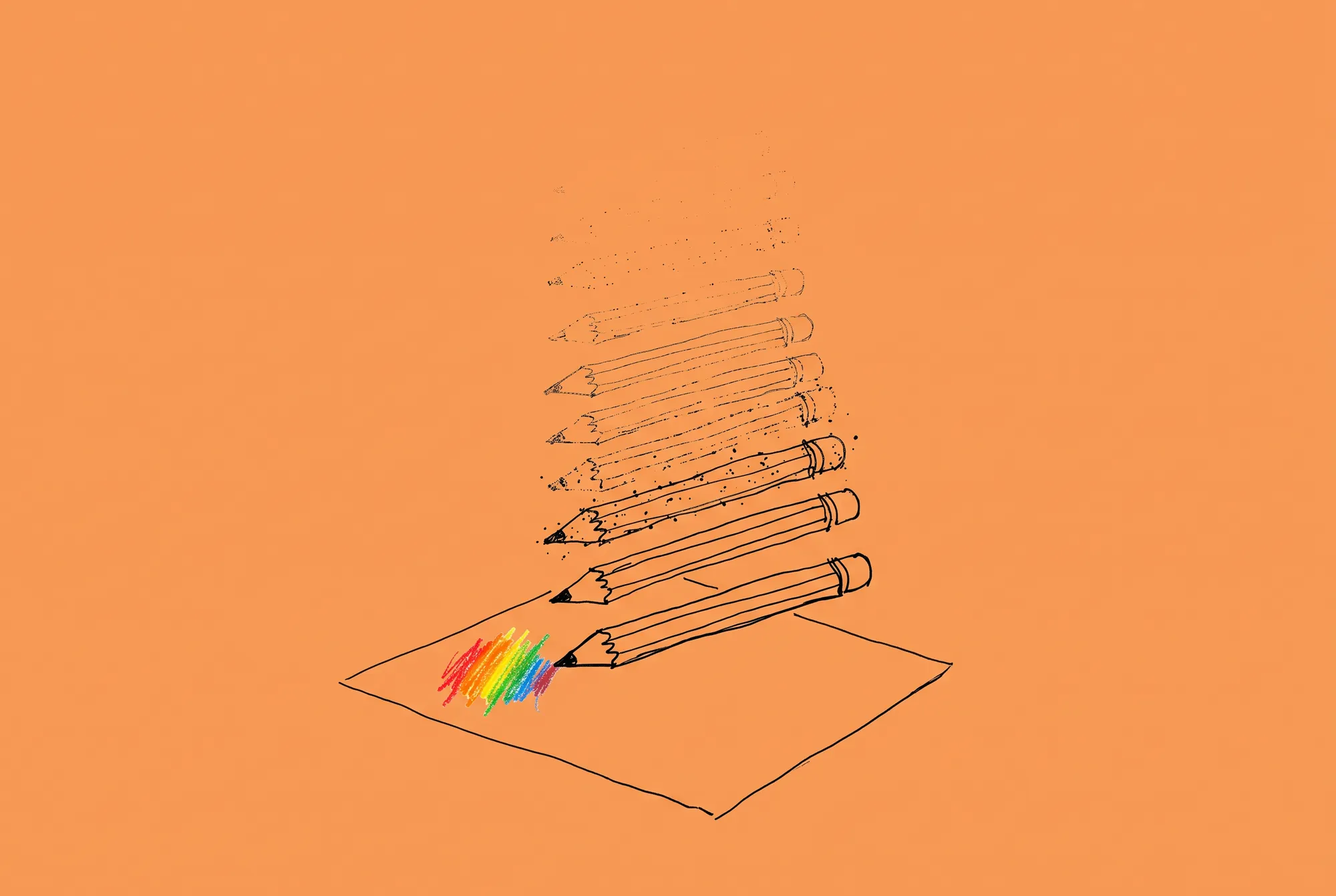
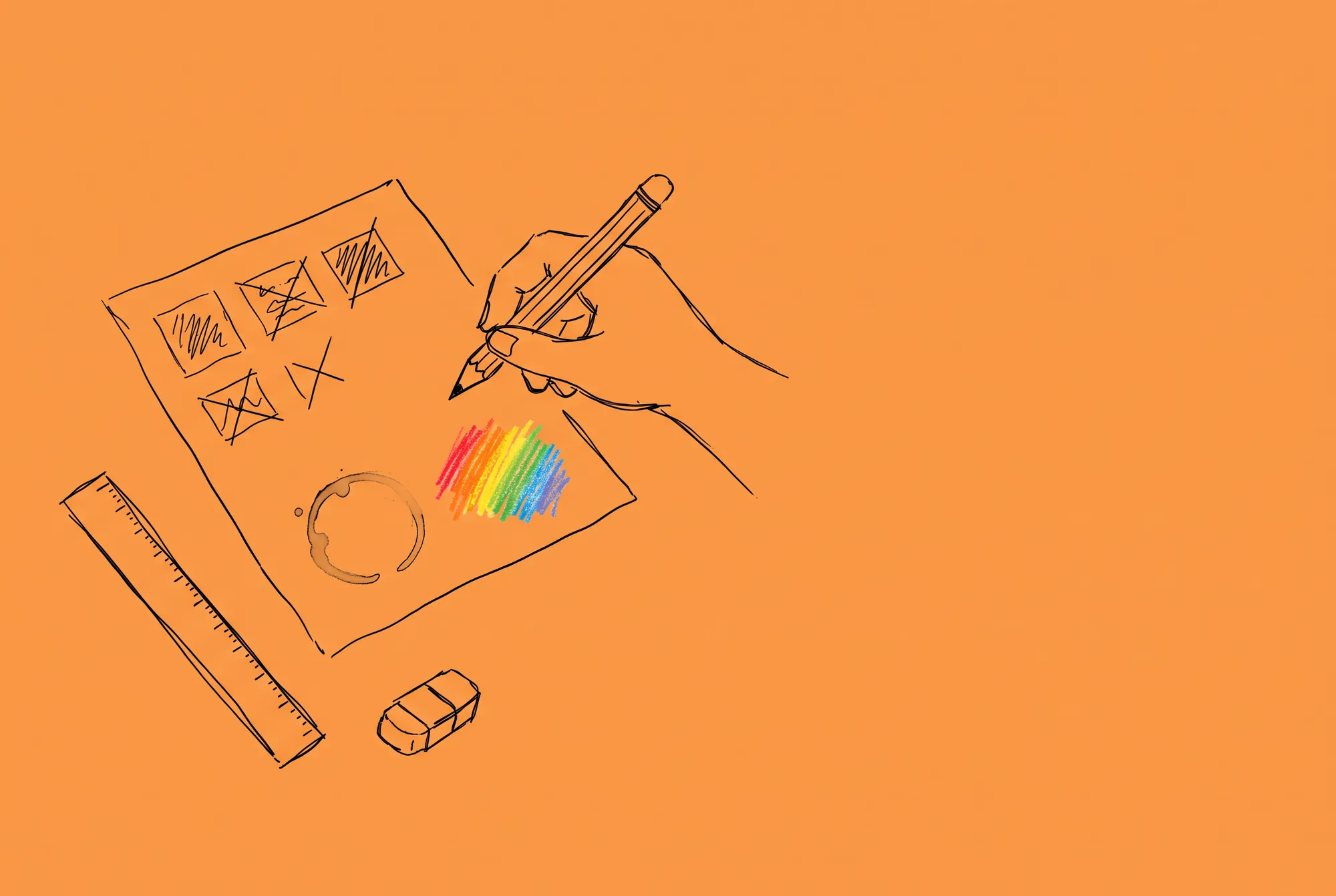
And because it can do all of that, it’s tempting to let it handle the whole process. But the creative process was never just about the final output. It was about the thinking before it: the blank page, the rough sketches, the strange references, the ideas that went nowhere and the happy accidents that led somewhere unexpected.
Sometimes the best ideas come from getting things wrong. Sometimes you find a new direction simply because you spent time on something you thought wouldn’t work. If we skip those stages because a tool gives us an answer in seconds, what happens to our ability to think independently?
I don’t think AI is making us less creative. I think we risk making ourselves less creative by choosing convenience over curiosity, again and again. And that’s a very different problem.
04/ 07
What happens to the people who make a living creating?
The creative industry is changing economically too. For independent designers, illustrators, photographers and small studios, AI is already changing the nature of some assignments. A café can try its own menu designs. A small business can generate promotional posters. A marketing team can produce dozens of variations without commissioning each one.
Not all of it will be good and not every creative problem can be solved by generating an image. But these tools are changing what clients expect and what they’re willing to pay for. Designers are adapting, as they should, moving towards strategy, creative direction and brand consulting, or building AI into their daily process. I don’t think we should resist the transition. Every industry evolves and ours will too.
What I do wonder about is what happens if the act of designing starts to lose its perceived value. What happens to people who spent years learning illustration, typography, photography and visual communication? What happens when the market values the speed of production over the thought behind the work? And what about the next generation of designers, who may enter the profession without ever feeling the need to learn the fundamentals?
I hope we never reach a point where knowing how to generate something matters more than understanding what makes it worth creating.
05/ 07
Here’s the irony: AI needs human creativity too
This is the thought I keep coming back to. AI models have learnt from human creativity. Behind the images we generate today are decades, even centuries, of artistic expression: paintings, photographs, illustrations, graphic design, architecture, typography, film. Generations of artists and designers experimented, challenged conventions and made things that had never existed before. All of that helped shape the systems we’re so excited about.
And now we’re using those systems to generate more content inspired by existing creative work. So here’s the question: if we stop creating original work, what will AI have left to learn from?
Of course, models won’t run out of material overnight. There’s an enormous archive of human creativity and people will keep adding to it. But creativity isn’t a static collection of references. It’s an evolving process. Art movements, design movements and photographic styles didn’t emerge because someone kept asking a machine for variations of what already existed. They emerged because people looked at the world differently, challenged what was considered normal and tried ideas nobody had explored.
If the creative ecosystem starts feeding on generated variations of existing work, we risk a cycle of imitation: AI learning from AI, people referencing AI-generated work and the next wave of content built on the last one. Researchers have already described a technical version of this called model collapse, where models trained on their own output gradually degrade (Shumailov et al., Nature, 2024). The creative version would be quieter: an enormous amount of visual output and fewer genuinely new directions.
06/ 07
I don’t want us to go backwards. I want us to keep creating
I don’t think the solution is to stop using AI or return to the days when everything took hours of manual effort. That would miss the point. I want designers to use these technologies, experiment with new models, connect their applications, automate repetitive tasks and explore possibilities earlier generations never had.
But I also want us to keep doing the things that make us designers.
- Draw something without generating it.
- Sketch an idea before asking AI for concepts.
- Explore typography before asking for recommendations.
- Go out, observe, take photographs, visit exhibitions, study art, look at architecture and find inspiration outside the internet.
- Make something that doesn’t have a reference.
- Try an idea that might not work.
- Build a visual language that isn’t a variation of an existing trend.
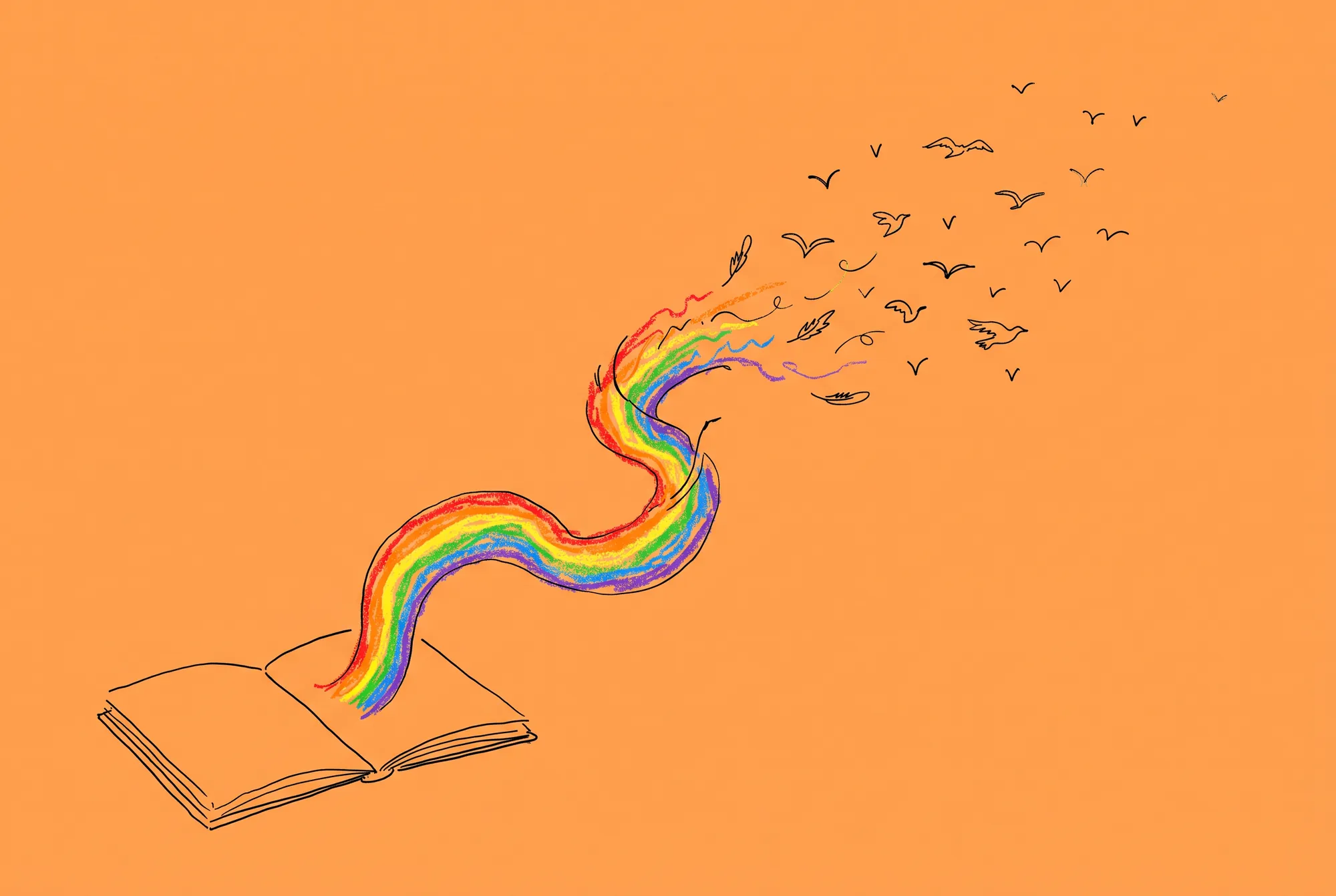
And most importantly, learn to think independently. Use AI to extend your imagination, not replace it. Let it help you execute faster, but don’t let it decide what you imagine. Because the more capable these tools become, the more important our own creative judgement will be.
07/ 07
A thought for the future
I honestly don’t know what the design industry will look like in five or ten years. Maybe the tools will become so advanced that today’s workflows seem primitive. Maybe entire categories of creative work will disappear while new disciplines emerge. I’m excited to find out.
But I hope that somewhere in all this progress, we remember that creativity isn’t simply the ability to produce an output. It’s the ability to see something differently, to question the ordinary, to connect unrelated ideas and to imagine something that doesn’t exist yet and find a way to bring it into the world.
I don’t want to see a generation of designers who are brilliant at operating AI but have never felt the satisfaction of developing an idea entirely on their own. I don’t want to see artists who can generate a thousand illustrations but have lost the desire to draw. And I certainly don’t want an industry that produces more visual content than ever but becomes less adventurous in its thinking.
The responsibility is on us, the people working in the creative industry, to make sure that doesn’t happen. We should embrace the tools but keep investing in ourselves, appreciate automation but protect experimentation, welcome accessibility but never compromise on curiosity.
Because if there’s one thing I hope AI never takes away from us, it’s the desire to create something simply because we imagined it.
The future of creativity shouldn’t be about how much we can get AI to create for us. It should be about how much more creative we can become with it.